

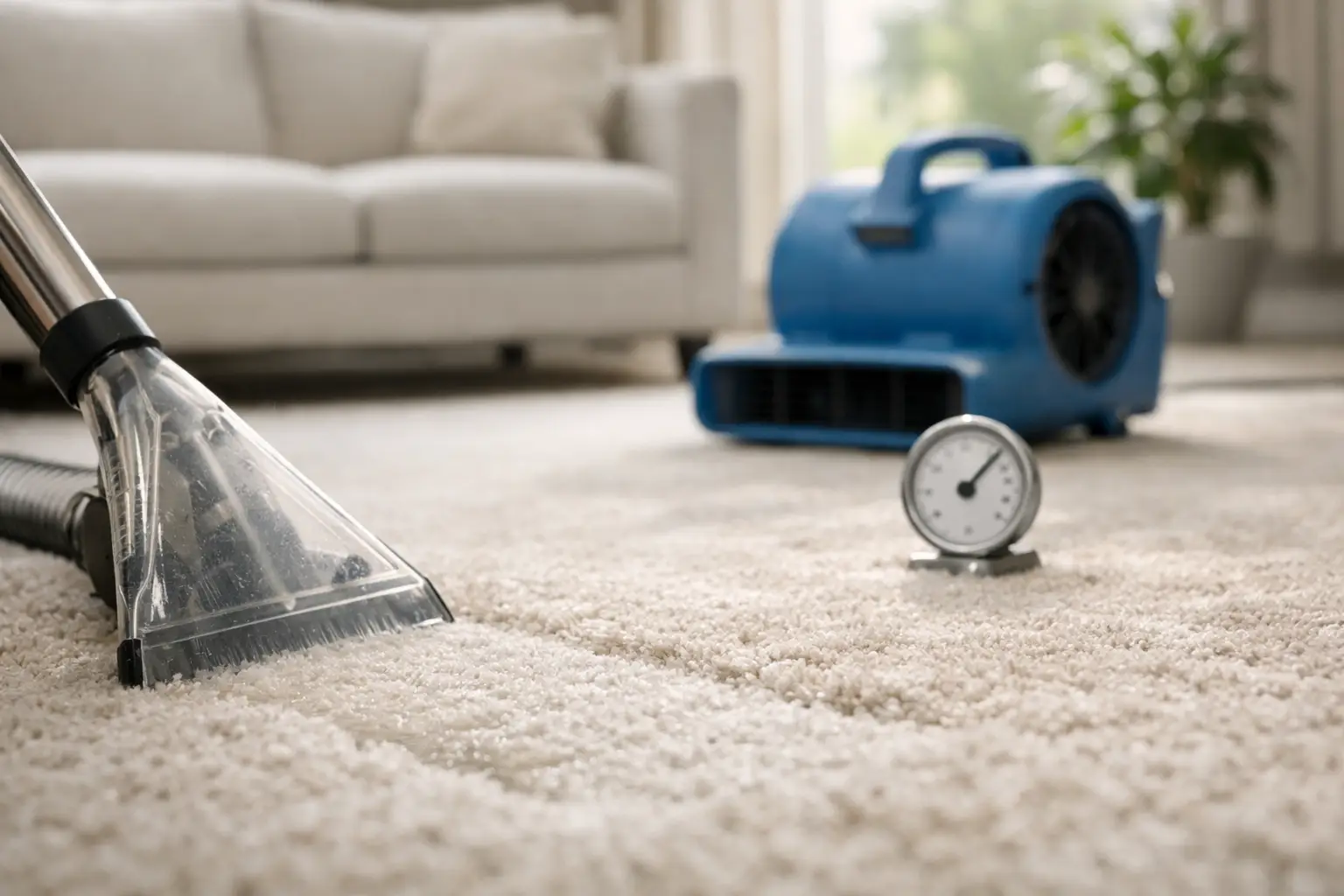
You book a carpet clean, the stains lift, the room smells fresher, and then the next question hits – how long do carpets dry? If you have kids, pets, guests coming over, or furniture waiting to go back in place, drying time matters just as much as the clean itself.
The short answer is that most carpets dry within 4 to 12 hours after professional cleaning, but that range can shift quite a bit. Some carpets are touch-dry in a few hours. Others can still feel slightly damp well into the evening, especially in cooler weather or rooms with poor airflow.
How long do carpets dry in real homes?
In real homes, drying time depends on the method used, the carpet fibre, the weather, and how much moisture goes into the carpet in the first place. A well-carried-out hot water extraction clean with strong suction usually leaves carpet damp rather than soaking wet. In those cases, many homes see dry times around 6 to 8 hours.
Dry carpet cleaning methods can be faster. Some jobs are ready to use in 1 to 3 hours because they rely on much less moisture. That sounds ideal, but it is not always the right method for every carpet or every stain. Heavier soiling, pet accidents, and deep odours often need a more thorough flush and extraction process.
That is why there is no one-size-fits-all answer. The best cleaning method balances drying time with the result you actually need.
What affects how long carpets dry?
The biggest factor is how much water remains in the carpet after cleaning. Professional equipment with strong extraction removes far more moisture than hired machines or smaller portable units. If the carpet has been over-wet, it will naturally take longer to dry.
Weather also plays a big part. In Melbourne, a warm day with low humidity and open windows can help carpets dry much faster. On cold, damp, or rainy days, moisture hangs around longer. Even if the carpet was cleaned properly, the room itself may slow things down.
Airflow matters just as much as temperature. A closed-up bedroom with no fan and no cross ventilation dries far more slowly than a living area with open windows and moving air. Heating can help in winter, but gentle airflow is usually what makes the biggest difference.
Carpet thickness changes the timeline too. Plush or high-pile carpet holds more moisture than low-pile carpet. Underlay can also affect drying, especially if extra moisture has worked its way down during cleaning or from older spills already sitting beneath the surface.
Then there is the condition of the carpet. A lightly soiled carpet may only need a standard clean. A carpet with built-up dirt, pet urine treatment, or stubborn staining may require extra passes, rinsing, or spot work, which can add to drying time.
Steam cleaning vs dry cleaning drying times
Homeowners often ask whether steam cleaning always means a wet carpet for the rest of the day. Not necessarily. Professional steam cleaning, more accurately called hot water extraction, uses water to rinse and remove soil from deep in the fibres. Done properly, it should not leave the carpet drenched.
For most homes, hot water extraction dries in about 4 to 12 hours. In favourable conditions, it may be closer to the lower end. In winter or in shaded rooms, it can take longer.
Dry carpet cleaning generally dries faster, often within 1 to 3 hours. That makes it attractive for offices, tenanted properties, or households that need quick access. The trade-off is that dry methods may not deliver the same level of deep flushing for heavily soiled carpet, allergy concerns, or pet odours.
A good cleaner should recommend the method based on your carpet, not just the fastest possible turnaround.
When is it safe to walk on the carpet?
In most cases, it is fine to walk on freshly cleaned carpet straight after the job if you need to, but it is best to keep traffic light and wear clean socks. Bare feet can transfer oils, and shoes can bring dirt straight back onto damp fibres.
If possible, give the carpet a few hours before normal use. For busy family homes, that often means planning the clean earlier in the day so the carpet has time to dry before evening.
Children and pets are better kept off the area until it is mostly dry. This helps avoid resoiling and stops little feet or paws from picking up any remaining moisture.
Can furniture go back straight away?
This is where people accidentally create marks after an otherwise excellent clean. Heavy furniture should usually stay off damp carpet until the area is properly dry. Timber furniture can stain carpet if moisture draws colour or finish out of the legs, and metal items can rust and transfer marks.
If furniture needs to be put back sooner, protective tabs or blocks under the legs help prevent damage. Many professional cleaners use these as part of the service. Even then, it is smart to avoid dragging furniture across damp carpet.
How to help carpets dry faster
If you want to speed up drying time, small steps make a noticeable difference. Open windows if the weather allows. Use ceiling fans, pedestal fans, or air conditioning on a dry setting. In colder months, moderate heating can help, especially when combined with airflow.
Try not to crowd the room. The more open the carpet surface is, the easier moisture can escape. If rugs, baskets, or furniture are placed back too soon, they trap dampness and slow the process.
It also helps to choose a cleaner who uses high-powered extraction equipment rather than basic machinery that leaves too much moisture behind. That part often matters more than any aftercare trick.
Signs your carpet is taking too long to dry
A carpet that is still slightly cool or faintly damp after several hours is not always a problem. But if it feels wet after 24 hours, something is off. It may be poor airflow, high humidity, over-wetting, or an issue in the underlay.
A musty smell is another sign to pay attention to. Freshly cleaned carpet should smell clean or neutral, not sour or swampy. If dampness lingers too long, that can create odour problems and, in some cases, encourage mould growth.
If you are unsure, contact the cleaner promptly. A professional service should be able to talk you through whether the drying time is still within a normal range or whether the carpet needs attention.
Why professional equipment makes a difference
A lot of frustration around drying times comes from DIY machines. Supermarket or hired units can clean the surface to a point, but they often put in more water than they pull back out. That leaves carpets wetter for longer and can make stains wick back as the carpet dries.
Professional systems are designed to control water use and maximise extraction. That means a deeper clean without unnecessary soak time. For households dealing with pet odours, end-of-lease requirements, or high-traffic family rooms, that difference is worth it.
For customers around Melbourne’s western suburbs, this is one reason many choose an experienced local service such as Green Lion Carpet Clean rather than guessing with a hire machine. Better equipment usually means better results and a more predictable dry time.
The answer most people actually need
If you are planning your day, the safest expectation is this: after professional carpet cleaning, allow 6 to 12 hours for drying, expect faster results in warm and well-ventilated rooms, and longer in cool or humid conditions. If a dry-cleaning method is used, it may be much quicker.
That estimate gives you room to plan around school pick-ups, pets, furniture, or business foot traffic without being caught out.
Freshly cleaned carpet is one of those jobs that feels simple on the surface, but the result depends on the method, the equipment, and the conditions in your home. If the clean is done properly, drying should feel like a short wait, not a full-day headache. And if you are ever unsure, ask the cleaner before the job starts – a clear answer upfront usually saves a lot of shuffling around later.


ProDentim is a modern oral-health supplement formulated with specialized probiotics and naturally sourced ingredients to help maintain firm teeth
ProDentim is a distinctive oral-care formula that pairs targeted probiotics with plant-based ingredients to encourage strong teeth, comfortable gums, and reliably fresh breath.
GL Pro is a natural dietary supplement formulated to help maintain steady, healthy blood sugar levels while easing persistent sugar cravings.
NerveCalm is a high-quality nutritional supplement crafted to promote nerve wellness, ease chronic discomfort, and boost everyday vitality.
[…] rain, the issue is often humidity rather than direct water exposure. Rooms with limited ventilation can leave carpets feeling dry on top while still holding dampness […]