
A sofa can look perfectly clean and still make the whole room smell off. That stale, musty or sour smell usually means odours have settled below the surface, into the fabric, foam or frame. If you are wondering how to remove sofa odours without damaging the material or masking the problem, the key is to treat the cause, not just the smell.
How to remove sofa odours without making them worse
The first mistake most people make is spraying deodoriser over the top and hoping for the best. That might help for an hour or two, but it does not deal with the source. Odours from pets, food, body oils, smoke, mildew or spills tend to soak into soft furnishings, especially in busy family homes.
The second mistake is using too much water. A sofa that stays damp for too long can develop a stronger smell than it had to begin with. This is especially common with DIY cleaning on thick cushions or older upholstery where moisture gets trapped in the padding.
A better approach is simple. Identify what caused the odour, choose a cleaning method that suits the fabric, and dry the sofa thoroughly. If the smell has been there for a while, or it keeps coming back, professional upholstery cleaning is often the safest option.
Start by checking the sofa fabric
Before using anything, check the manufacturer’s care tag if it is still attached. Some lounges can handle water-based cleaning, while others need low-moisture methods or solvent-based products. If there is no tag, test any product on a hidden area first.
This matters because fabric sofas, leather lounges and delicate blends do not all respond the same way. What works well on a sturdy polyester couch may stain, shrink or mark a linen blend. Leather needs a different approach again, as soaking it can lead to drying, cracking or discolouration.
If you are unsure, caution is better than guesswork. A bad DIY attempt can set the odour deeper or leave watermarks that are harder to fix than the original smell.
Remove loose dirt before treating the odour
A proper vacuum does more than tidy the surface. Dust, crumbs, pet hair and skin cells all trap smells, and if you wet the sofa before removing them, you can turn that dry build-up into grime.
Use an upholstery attachment and go slowly over seat cushions, back cushions, armrests and along seams. Lift loose cushions and vacuum both sides, plus the base underneath. Pay extra attention to creases where food, fur and debris collect.
This step seems basic, but it makes every cleaning method more effective. It also helps you spot the real problem areas, such as a spill mark, pet accident or patch of mildew.
Deodorising methods that work for everyday sofa smells
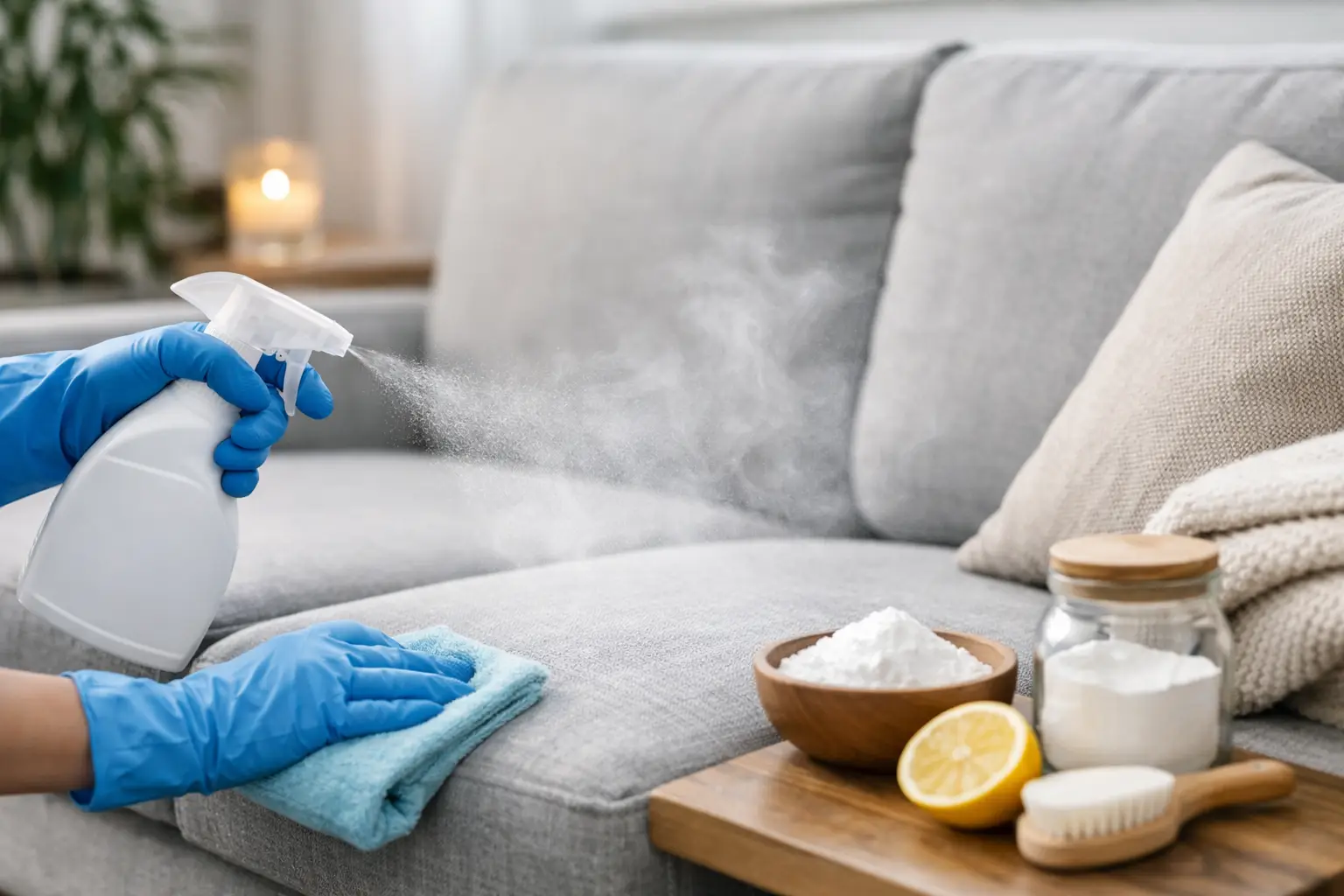
For mild odours, dry deodorising is usually the safest place to start. Bicarbonate of soda is a reliable option for many fabric sofas because it absorbs smells rather than covering them up.
Lightly sprinkle it over the dry surface, leave it for several hours, then vacuum it thoroughly. If the smell is general mustiness or a light stale odour, this can make a noticeable difference. It is less effective when the problem comes from a deep spill, pet urine or smoke that has penetrated the padding.
Fresh air also helps more than people expect. Open windows, improve airflow and, if possible, move cushions so trapped moisture can escape. A sofa in a room with poor ventilation often holds onto odours for longer, especially through winter or after heavy use.
You can also wipe hard, non-fabric sections such as legs or frames with a mild cleaning solution. Sometimes the smell is not only in the cushions. Dust and grime on surrounding surfaces can add to the overall odour in the room.
How to remove sofa odours from spills and body oils
Spills and everyday use leave more than visible marks. Drinks, takeaway oils, sweat and skin oils can soak into upholstery and create a sour smell over time.
If the spill is fresh, blot it immediately with a clean dry cloth. Do not rub, as that pushes it further into the fibres. Once the excess moisture is removed, use a fabric-safe upholstery cleaner in a small amount and blot again.
For older smells, the challenge is that the liquid may already be in the foam underneath. Surface cleaning can help, but if the odour is coming from inside the cushion, it may return once the sofa warms up again from body heat or a closed room. That is one of the clearest signs the job needs a deeper extraction clean.
Pet odours need more than a surface spray
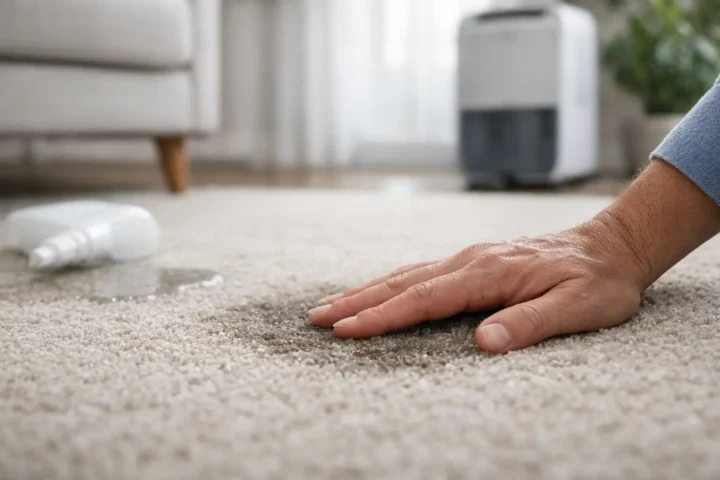
Pet smells are one of the hardest issues to solve at home. Fur, dander, natural oils and accidents can all build up in upholstery. Even if you cannot see a stain, the smell may still be there.
For routine pet smell, regular vacuuming and a dry deodorising treatment can help. For urine, you need an odour treatment designed to break down the source. A standard fragranced spray is rarely enough. In some cases, moisture has already travelled through the cushion into the frame, which means the smell can linger no matter how often the cover is cleaned.
If a pet keeps returning to the same spot, that usually means traces remain even if the area looks clean. Professional pet odour treatment is often the most effective fix because it targets the contamination at a deeper level and extracts residue instead of leaving it behind.
Smoke and musty smells can sit deep in the upholstery
Smoke odours from cigarettes, fireplaces or cooking tend to cling to soft furnishings. Musty smells are different, but just as stubborn. They usually point to trapped moisture, poor ventilation or past water exposure.
In both cases, a quick spray does very little. Smoke particles settle into fabric and foam, while mustiness often means the sofa has absorbed dampness. If the sofa has ever been over-wet during DIY cleaning, that may be contributing to the problem.
A low-moisture clean followed by strong airflow can help with mild mustiness. But if there is mould or mildew involved, it is best not to experiment. That needs proper treatment, and in some cases the sofa may be too affected to fully restore.
When DIY is enough and when to call a professional
There is a difference between a sofa that smells a bit stale and one that has a deep-seated odour problem. DIY methods are usually worth trying when the smell is light, recent and clearly linked to surface dirt. They are less reliable when the odour comes from old spills, pet accidents, smoke, dampness or contamination inside the padding.
Professional upholstery cleaning becomes the better option when the smell returns after home treatment, the sofa still feels damp hours later, or there are multiple causes layered together. This is especially relevant in homes with kids, pets or heavy daily use, where hygiene matters just as much as smell.
A professional clean is not just about freshening the surface. With the right equipment and fabric-safe products, it can remove embedded soil, extract residues and improve drying time. That reduces the risk of leaving the sofa too wet and starting the cycle again.
For households across Melbourne’s western suburbs, this often saves time and guesswork. Instead of trialling product after product, you get a method matched to the fabric and the source of the odour.
Preventing sofa odours from coming back
Once the sofa smells fresh again, a few habits make a big difference. Vacuuming regularly stops dust and pet hair from settling in. Cleaning spills straight away prevents sour smells from developing later. Good ventilation helps cushions dry out after cleaning and keeps general mustiness down.
If pets use the sofa often, washable throws can help protect the fabric. If the lounge gets heavy use from the whole family, an occasional professional clean is a practical way to stay ahead of built-up odours before they become obvious.
The real trick is not waiting until the smell takes over the room. Sofas absorb everyday life more quickly than most people realise, and the sooner you deal with odours, the easier they are to remove.
If your sofa still smells after trying the safe basics, that usually means the source is deeper than the surface. At that point, the smartest move is not stronger perfume or more scrubbing – it is a proper clean that gets to the cause and leaves the room feeling fresh again.